
Highlights
| English training for logistics teams in Ireland can cost less than expected once Skillnet Ireland funding is applied. English training for logistics teams in Ireland can cost less than expected once Skillnet Ireland funding is applied. This guide outlines typical costs by company size, explains how the CILT Mobility & Supply Chain Skillnet subsidy works, and shows logistics managers how to calculate returns on documentation, communication and client-service training investments. |
English Training for Logistics
English training for Irish logistics companies typically costs between €250 and €750 per employee, depending on company size and programme length. Through Skillnet Ireland’s CILT Mobility & Supply Chain Skillnet, eligible businesses can access subsidised rates, with Everywhere English clients typically seeing around 20% off training costs. Everywhere English delivers sector-specific English training for logistics and supply chain teams, with live tutor sessions, 24/7 self-study access, and monthly HR progress reports.
Does your logistics team struggle with international client communications or shipment documentation? You’re not alone. Communication breakdowns cost Irish logistics companies thousands every year in delayed deliveries, documentation errors, and lost contracts.
The good news? You can reduce your training costs through Skillnet Ireland’s CILT Mobility & Supply Chain Skillnet programme. This dedicated logistics network subsidises training for companies in the transport and supply chain sectors, making professional English development more accessible for Irish businesses.
This guide explains what English training costs for logistics companies, how to access government funding that can reduce your investment to zero, and what return you can realistically expect on your training spend. It also covers why generic business English courses simply don’t cut it for logistics teams, and what sector-specific training looks like in practice.
Three Things to Know Before You Read On
• Skillnet Ireland funded over 3,665 training days in the logistics sector last year.
• Everywhere English clients typically access around 20% off training costs through the Skillnet network, reducing the investment from day one.
• Sector-specific English training for logistics and supply chain teams outperforms generic business English courses in both speed of uptake and business outcomes.
What Does English Training Cost for Logistics Companies?
Training costs vary based on your company size, skill levels, and the delivery format you choose. Here’s what Irish logistics businesses typically invest:
| Company Size | Programme Cost | Per-Employee Cost | Focus Areas |
| Small (5-15 staff) | €2,500-€4,500 | €250-€450 | Customer service, email, phone handling |
| Medium (16-50 staff) | €6,000-€12,000 | €300-€600 | Dispatch, warehouse documentation, client liaison |
| Large (50+ staff) | €15,000-€30,000 | €350-€750 | Management comms, international negotiations |
Online training typically costs 20-30% less than classroom delivery. Blended programmes combining live tutor sessions with flexible self-study tend to deliver the strongest results for teams working shifts or across multiple sites, which is most logistics operations in Ireland.
How CILT Mobility & Supply Chain Skillnet Reduces Your Investment

CILT Mobility & Supply Chain Skillnet is Ireland’s only Skillnet network dedicated to transport, logistics, and supply chain sectors. It receives annual funding from Skillnet Ireland and uses it to provide subsidised training to logistics companies across the Republic of Ireland.
In practice, Everywhere English clients through the Skillnet network typically save around 20% on their training investment. That’s a real difference that kicks in from your very first programme. Book a free consultation with us to learn more about available funding options and how they fit your team.
The network is co-funded by the Government of Ireland and the European Union, and is open to private enterprises in the logistics, transport, and supply chain sectors. Membership is free, and once your company joins, you can access subsidised rates across a wide range of programmes. You can find out more about available funding options on the Everywhere English government-funded training page.
What Training Can You Fund?
The network covers English training when it meets these criteria:
• Directly relates to job roles in logistics, transport, or supply chain
• Addresses specific business communication needs
• Benefits private sector or commercial semi-state employees
• Forms part of structured skills development
Budget 2026 allocated €54.2 million to Skillnet Ireland, matched by up to €26 million in private-sector contributions. This creates an €80 million fund for workforce development across Irish businesses, with logistics companies able to access this through any of Ireland’s 70 Skillnet Business Networks.
What the Skillnet Subsidy Means in Real Terms
A 20% reduction in training costs doesn’t sound dramatic until you apply it to a full-team programme. If your logistics company invests €6,000 in English training for 20 staff, that subsidy brings the cost down to €4,800, saving €1,200 without any reduction in programme quality or delivery hours.
Scale that across multiple cohorts or departments over a year, and the savings become significant. More to the point, the subsidy reduces the barrier to getting started. Many Irish logistics managers tell us the cost of inaction is far higher than the cost of training, particularly when documentation errors, client complaints, and staff turnover are factored in.
The CILT Skillnet network also brings additional value beyond the subsidy. As an industry-led network, it has direct insight into the communication skills gaps affecting Irish logistics operations, which means the programmes it supports are built around real sector needs rather than generic language learning.
Why Generic Business English Doesn’t Work for Logistics Teams
Would a standard business English course teach your team about bills of lading, dangerous goods documentation, or customs declaration language? Almost certainly not. Effective English for logistics teams needs to cover the actual language your staff use every day.
Documentation Communication
International shipping requires precise English in bills of lading, customs declarations, dangerous goods certificates, and insurance documents. A small error or unclear wording can delay shipments for days or trigger costly compliance issues. Your team needs the specific vocabulary and phrasing used in real logistics contexts, not general grammar exercises.
Real-Time Problem Solving
When a shipment goes wrong or a customer needs urgent updates, your team can’t hesitate or struggle through a language barrier. Training builds the confidence to handle live customer calls, coordinate with international partners, and work through delivery issues quickly. This is where logistics-specific training earns its place.
Supply Chain Coordination
Modern logistics depends on constant communication between suppliers, carriers, warehouses, and customers. Your staff need English skills that support efficient coordination across time zones, cultures, and technical systems. Generic courses simply don’t replicate these scenarios.
Client Relationship Management
Many Irish logistics companies compete for contracts with UK and international clients. The team that communicates most professionally and responsively often wins the business. For a broader look at how language training supports business growth, see our guide on English training for Irish businesses.
How to Calculate Your Return on English Training
Smart logistics managers want to know what return they’ll see on training spend. Here’s a practical way to measure the financial impact.
Immediate Savings
• Fewer documentation errors: each customs declaration mistake can cost €200-€800 in delays and reprocessing
• Reduced client queries: better communication cuts time spent clarifying shipment details by 30-40%
• Faster problem resolution: clear English communication resolves delivery issues 2-3 times more quickly
Revenue Growth
• New contract opportunities: professional English communication opens doors to UK and international clients
• Higher client retention: better service communication improves customer satisfaction scores
• Stronger pricing position: companies known for clear, professional communication can often charge 5-10% more
Operational Efficiency
• Less supervisor time spent clarifying or translating communications
• Quicker onboarding for international systems and documentation
• Smoother coordination with overseas partners and customs authorities
A typical logistics company investing €5,000 in English training (after Skillnet subsidies) reports first-year benefits of €18,000-€25,000 through reduced errors, new business, and efficiency gains. That’s a return of between 3.6x and 5x on the original investment.
Accessing Skillnet Funding: Your Step-by-Step Process
Getting your logistics training funded through Skillnet Ireland takes less work than you might expect!
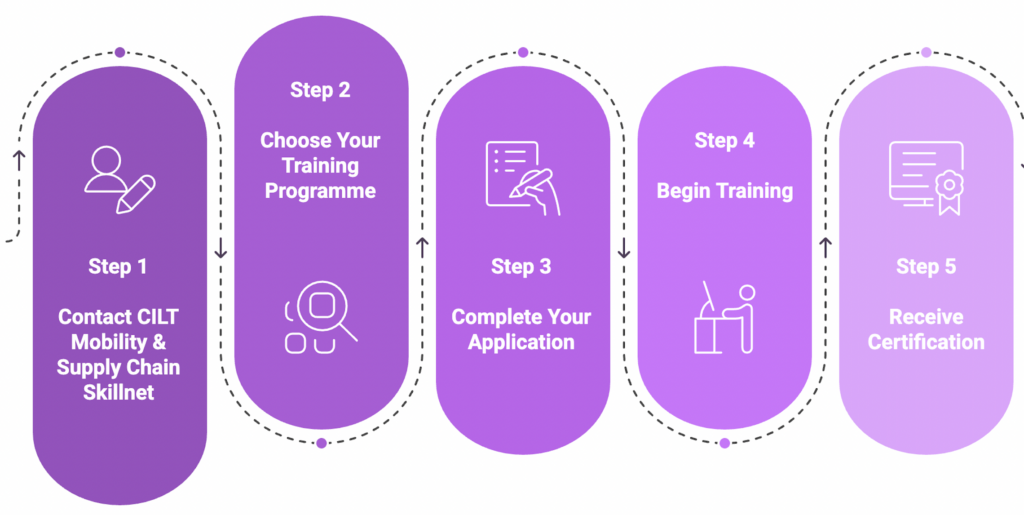
Step 1: Contact CILT Mobility & Supply Chain Skillnet
Reach out directly to discuss your company’s training needs. Network managers help identify appropriate programmes and confirm your eligibility for funding. They’ve helped hundreds of logistics businesses through this process.
Step 2: Choose Your Training Programme
Select from existing courses or request customised training that addresses your specific communication challenges. Everywhere English offers both off-the-shelf logistics English programmes and bespoke training designed around your operations.
Step 3: Complete Your Application
Submit the required documentation showing your business operates in the transport, logistics, or supply chain sector. The application process typically takes 2-3 weeks from initial contact to approval.
Step 4: Begin Training
Start the training knowing your Skillnet subsidy will cover 20% of costs and your company will only cover the remaining 80% of the tuition.
Step 5: Receive Certification
Participants complete training with recognised qualifications that support their professional development and career progression within your business.
The entire process from first contact to training delivery usually runs 4-8 weeks. Many companies carry out multiple training programmes throughout the year, building professional English skills across different departments at a pace that suits operations.
Why Irish Logistics Companies Need to Act on This Now
Communication challenges aren’t getting simpler for Irish logistics operations. Brexit created additional documentation requirements. Digitalisation demands new technical communication skills. Sustainability reporting requires precise English for environmental data. International expansion means more client contact across borders.
Some managers look at the training cost and say ‘we still can’t afford it’ — even after the Skillnet subsidy is applied. That’s a fair concern. But it’s worth asking the other question: what is the current cost of documentation errors, missed client instructions, lost contracts, and daily communication breakdowns on your floor? That’s the real investment decision, and for most Irish logistics operations, the numbers aren’t close.
You can read about the specific communication challenges facing logistics teams, and how structured training addresses them, in our English for Logistics service page.
Ready to Access Funded English Training for Your Logistics Team?
Your logistics team deserves the communication skills that support excellent client service and efficient operations. Government funding through CILT Mobility & Supply Chain Skillnet makes professional English training remarkably affordable for Irish transport and supply chain businesses.
One of our clients, an Alicante-based logistics & distribution firm, equipped their entire team, including staff handling daily supplier negotiations and client calls. From hesitant phone conversations to fluent, role-specific English through tailored one-to-one lessons + self-study hub. Read their full story and get inspired by their results.
Everywhere English specialises in sector-specific business English training that addresses real logistics communication challenges. Our programmes cover the precise language your team needs for documentation, client liaison, and supply chain coordination, and they qualify for Skillnet Ireland funding.
Contact us for a no-obligation consultation about your logistics team’s English training needs. We’ll help you access available funding and design a programme that delivers measurable results. Get in touch via the contact page, and let’s get your team communicating with confidence.