

Highlights
| Most Dublin logistics companies are paying too much for English training that delivers too little, and this guide on logistics English courses Dublin explains why sector-specific training makes the difference. It compares seven provider types on cost, delivery, and logistics expertise, covers Skillnet Ireland funding through CILT Mobility and Supply Chain Skillnet, and helps operations managers choose the right fit for their team size and shift patterns. |
Dublin logistics companies spend thousands of euros every year on English training that doesn’t move the needle. Generic business English courses teach your team to write formal emails and chair meetings. Your warehouse operatives, dispatch coordinators, and freight handlers need something entirely different. They need the precise language that keeps operations safe, documentation accurate, and supply chains moving.
This guide on logistics English courses in Dublin gives you a clear, practical comparison of the provider types operating in the city: what they charge, how they deliver, and if they actually understand logistics or simply rebrand general business English with a few extra vocabulary lists.
Three things to take from this guide:
- Logistics-specific training consistently outperforms generic business English for supply chain teams
- Skillnet Ireland funding can reduce your investment by 20%, depending on company size
- Sector expertise matters more than price when you’re measuring results in error rates, not exam scores
Why Logistics English Training Is Different
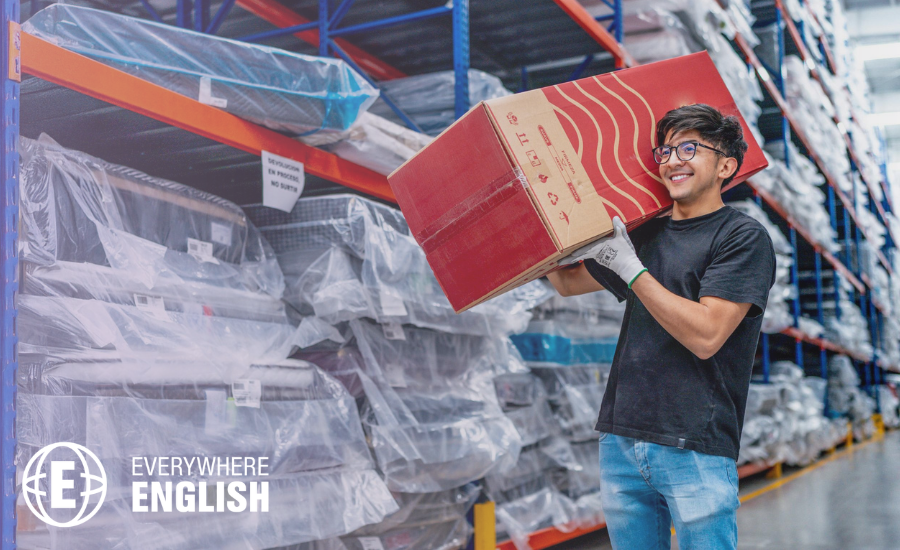
Generic business English prioritises presentations, meeting language, and professional email writing. Useful skills, no doubt, but not what your team reaches for on a Monday morning shift.
Your warehouse operatives don’t sit in boardrooms. They need to understand “secure the load before moving” and distinguish between a pallet jack and a reach truck without hesitation. Your dispatch coordinators handle international carriers, read bills of lading, and communicate delivery exceptions in real time. A course built around quarterly reports won’t prepare them for that.
Consider a Dublin freight forwarder choosing a general business English provider. After three months and €8,400 spent, teams speak more fluently in meetings. But documentation errors persist. Safety incidents stay flat. Operational communication, the real cost driver, shows zero improvement.
They switch to targeted logistics English training. Within two months, documentation errors drop 68%. The sector-focused approach costs €5,200 after Skillnet funding, saving money whilst delivering results you could measure on the warehouse floor.
The Seven Provider Types in Dublin
Understanding the market helps you ask the right questions before you commit to any logistics English courses in Dublin. Here’s how it breaks down.
1. Logistics-Specific English Providers
These build courses specifically for supply chain operations. Curriculum covers the terminology your staff actually use: dangerous goods classifications, customs documentation, load securing procedures, and shift handover language. Results tend to appear faster because learners recognise the material from day one.
Costs: €180–€350 per participant (30 hours) | Skillnet eligible: Usually yes
2. General Business English Schools
Large language schools with business modules. Curriculum is generic, with some logistics vocabulary available on request. Useful for managers and administrative staff, but less effective for operational teams.
Costs: €400–€650 per participant | Skillnet eligible: Sometimes
3. International Platform Providers
App-based learning with optional live tutoring. Flexible and self-paced, but sector-specific content is thin. Works well as a supplement, not a standalone solution for logistics teams.
Costs: €15–€35/month; €40–€80/hour for live tutoring | Skillnet eligible: Rarely
4. University Language Centres
Academic programmes from Trinity, UCD, and DCU. Qualified instructors and formal certification, but limited specialisation in logistics contexts. Good for staff pursuing qualifications.
Costs: €500–€800 per participant | Skillnet eligible: Sometimes
5. One-to-One Private Tutoring
Personalised instruction that adapts to individual needs. Quality depends entirely on the tutor’s sector knowledge. Without that background, it defaults to generic language practice.
Costs: €45–€90 per hour | Skillnet eligible: Rarely
6. In-House Training Departments
Internal programmes delivered by existing staff. Difficult to cost accurately and hard to scale. Works for basic induction language but rarely reaches the depth supply chain teams need.
Delivery: On-site | Skillnet eligible: No
7. Blended Learning Providers
Digital content combined with scheduled live sessions. A practical balance of structure and flexibility, well-suited to teams with rotating shifts and varying skill levels .Everywhere English uses this model across all its industry programmes.
Costs: €250–€450 per participant | Skillnet eligible: Usually yes.
Delivery Methods: What Actually Works for Logistics Teams?
Logistics doesn’t run on a 9-to-5 schedule. Training delivery has to fit your operational reality, not the other way around.
On-site Training at Your Facility
The trainer comes to your warehouse, distribution centre, or office. Staff learn in the environment where they work, using real equipment and actual documentation as course material. Maximum relevance, no travel time. Requires a dedicated training space and careful scheduling around operations. Best for larger teams of 15 or more participants.
Live Online (Virtual Classroom)
Scheduled sessions via video call. Instructors lead live classes, participants join from any location. Works well for geographically dispersed teams and shift workers who can’t all be in the same room. Sessions can be recorded for review. Requires reliable internet access.
Blended Learning
Self-paced digital modules combined with scheduled live sessions. Learners build vocabulary independently and practise it in group sessions. Accommodates varying shift patterns and skill levels, and tends to produce stronger retention than either method alone. This is the delivery model Everywhere English uses across its logistics English courses Dublin and beyond.
Self-Directed Digital
Entirely app-based. Maximum flexibility, lowest cost. High dropout rates and no accountability mean this rarely works as a primary training solution. Better suited as a supplement to structured training.
How to Evaluate If a Provider Actually Understands Logistics
Marketing copy from a business language school and a logistics specialist can look similar on a website. These questions will tell you which is which.
Check the Curriculum Content
Request a detailed course outline. Genuine logistics English courses Dublin covers:
- Dangerous goods classifications (UN numbers, hazard classes, segregation requirements)
- Customs terminology (HS codes, commercial invoices, certificates of origin)
- Warehouse equipment vocabulary (reach truck vs counterbalance forklift, dock leveller, pallet racking)
- Documentation standards (bill of lading, packing list, delivery note)
- Safety communication (lock-out/tag-out procedures, confined space, PPE requirements)
Ask About Instructor Backgrounds
Do the trainers have relevant industry exposure (logistics, manufacturing, or technical sectors)? Do they understand Irish workplace regulations for multilingual teams? Ask for references from comparable logistics companies.
Look for Specific Documented Results
Generic testimonials (“Great course, very helpful!”) tell you nothing. Ask for operational improvements: error rate reductions, incident frequency changes, efficiency gains, and how long it took to see results. A provider confident in their outcomes will share specifics.
Accessing Skillnet Ireland Funding

Not all Dublin English providers qualify for Skillnet Ireland funding. Those that do can dramatically reduce your outlay.
For logistics companies, CILT Mobility and Supply Chain Skillnet is the most relevant network. Qualifying providers must deliver training that addresses job-specific skills, provide a structured curriculum with measurable outcomes, and offer documented progress tracking. Funding typically covers 20% of course costs, depending on company size.
Contact CILT Mobility and Supply Chain Skillnet directly before committing to any provider. Confirm if the specific training qualifies for a subsidy and what the application process involves. Some providers handle Skillnet applications on your behalf. Others leave it entirely with you. Clarify this before signing anything.
Government-funded English training is also available through other Skillnet networks and SOLAS programmes, particularly for companies integrating non-native English speakers into skilled roles.
Choosing Based on Company Size
Small Operations (Under 20 Staff)
Logistics-specific providers with blended delivery give you the most relevant training at the lowest net cost after Skillnet funding. Typical investment after subsidies: €800–€2,000 for the full team.
Medium Companies (20–50 Staff)
On-site or blended logistics-specific training. At this size, you can justify on-site delivery and demand documented operational improvements as part of the contract. Typical investment after funding: €2,500–€6,000.
Large Operations (50+ Staff)
A combination of on-site sector-specific training and ongoing platform access works best. You need a scalable solution that covers new hires and refreshes existing staff. Typical annual investment after funding: €8,000–€15,000.
Individual Professional Development
Platform providers or private tutoring with a logistics-experienced tutor. Flexible for career-focused individuals. Typical annual investment: €200–€600 per person.
Questions Worth Asking Before You Commit
About the Curriculum
“Can you show me the specific vocabulary list participants will learn?” and “How do you customise content for warehouse versus office staff?” are the two questions that reveal if a provider genuinely understands your operations.
About Results
“What operational metrics improve after your training?” and “Can I speak with a similar Dublin logistics company you’ve trained?” separate providers with genuine outcomes from those offering only confidence boosts.
About Scheduling
“How do you accommodate shift workers?” and “What happens if participants miss sessions?” matter as much as curriculum quality. A brilliant course with 60% attendance delivers poor value.
About Funding
“Are your programmes Skillnet Ireland eligible?” and “Can you assist with the funding application?” should be answered clearly and early. If a provider is vague about funding eligibility, that’s worth noting.
Ready to Find the Right Training for Your Dublin Logistics Team?
Dublin logistics companies that see 60% error reductions don’t get there by chance. They choose providers who understand their operations, accommodate their shift patterns, and measure outcomes in terms that matter on the warehouse floor.
Start by contacting CILT Mobility and Supply Chain Skillnet to confirm what funding is available to your business. Then speak with two or three logistics-specific providers about your team’s actual communication gaps. Request detailed proposals that include curriculum content, scheduling options, and results from comparable clients.
Everywhere English specialises in English training for logistics and supply chain teams, with courses built around the language your warehouse staff, dispatch coordinators, and drivers use every day. Our programmes qualify for Skillnet Ireland funding through CILT Mobility and Supply Chain Skillnet, typically reducing your investment by 20%.
Get in touch for a no-obligation consultation. We’ll assess your team’s current communication challenges, recommend the right training intensity and delivery method, and help you access available funding. Let’s get your Dublin logistics operation communicating clearly, safely, and efficiently.