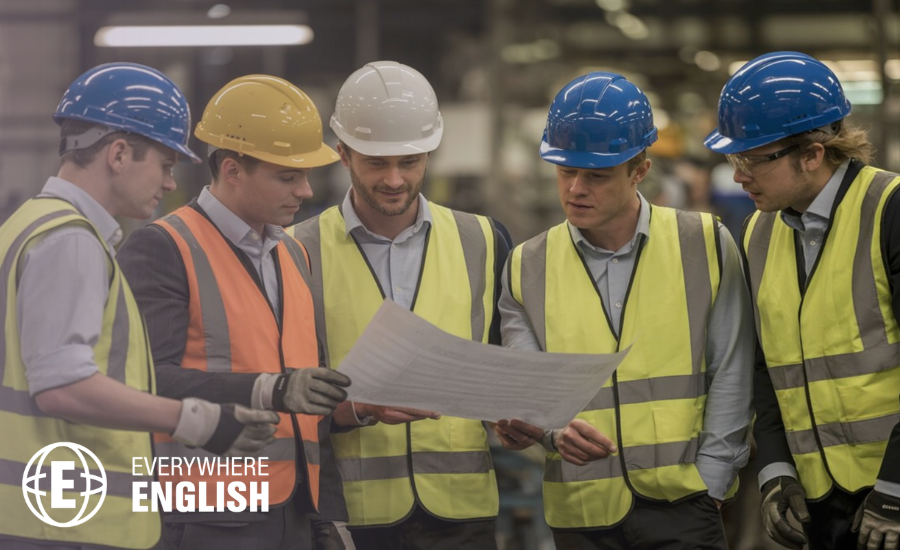

Northern Ireland’s manufacturing sector accounts for 11% of employment and 15% of gross value added in the economy. Thales manufactures defence systems and space propulsion technology in Belfast. Spirit AeroSystems produces aircraft wings using advanced composites. Precision engineering firms supply aerospace giants worldwide. Food manufacturing operations run 24/7. And across every one of these facilities, clear English communication is what separates a safe, efficient operation from one that carries unnecessary risk.
Your Northern Ireland manufacturing operation might employ production technicians from Poland, quality inspectors from Romania, maintenance engineers from Lithuania, and assembly workers from Portugal. Skilled professionals who are excellent at their technical roles. Yet communication gaps lead to safety incidents, quality issues, production delays, and employees who can’t contribute as fully as they’re capable of.
English manufacturing Northern Ireland training addresses these challenges by building the practical safety communication skills your production teams actually need day to day. Not academic grammar lessons. Real English for real manufacturing environments where unclear instructions create genuinely dangerous consequences.
Why Northern Ireland Manufacturing Demands Clear English
Manufacturing floor accidents don’t give warnings. A misunderstood safety instruction, an unclear machine operation procedure, and a hazard warning that didn’t land properly. These gaps cost Northern Ireland manufacturers through injuries, production stoppages, HSE investigations, and entirely preventable compensation claims.
Aerospace precision. Thales Belfast manufactures missile systems deployed by 56 armed forces worldwide. Spirit AeroSystems produces composite wings for Airbus A220 aircraft. Absolute clarity in safety protocols, quality procedures, and technical specifications is non-negotiable. Ambiguous communication here creates safety risks and quality defects that have serious consequences.
Engineering safety communication. Precision engineering throughout Belfast, Newtownabbey, and the surrounding areas demands clear lockout/tagout procedures, equipment operation instructions, and maintenance coordination. When your engineering workshop includes speakers of multiple first languages, English proficiency directly prevents accidents and maintains production quality.
24/7 production coordination. Many Northern Ireland manufacturers operate continuously. Shift handovers must clearly communicate production status, equipment issues, quality concerns, and safety incidents. Information lost between shifts creates continuity problems and safety risks that compound over time.
Not sure how to assess your team’s current communication gaps? Book a free consultation and we’ll help you identify where language barriers are creating the most risk in your facility.
Department for Economy Funding Available
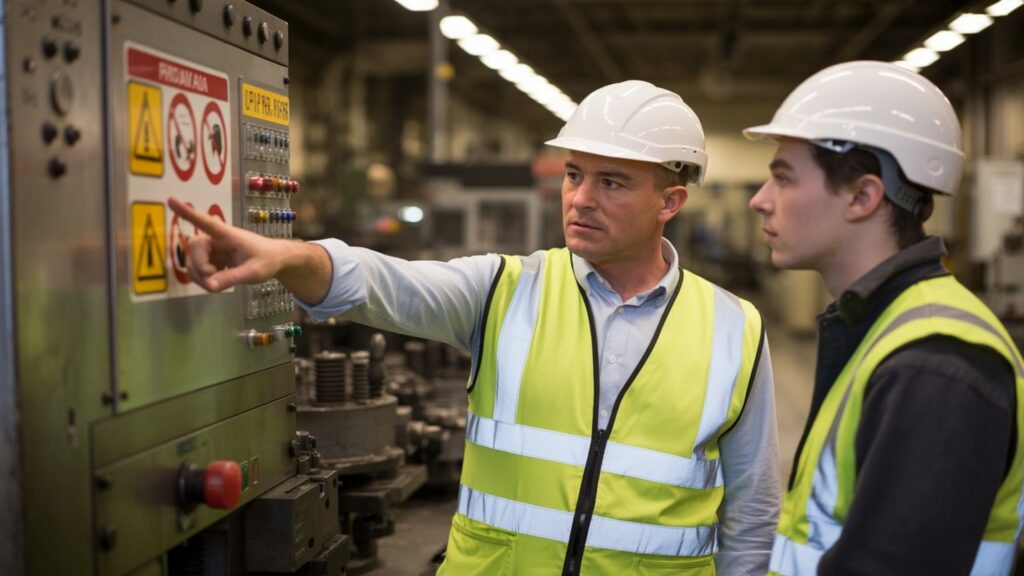
Northern Ireland manufacturing companies can access substantial government funding for English training through the Department for the Economy. These funding streams make professional safety communication training financially accessible whilst strengthening Northern Ireland’s manufacturing competitiveness.
Skills Focus Programme. The Department for the Economy provides tailored skills provision to businesses with fewer than 250 employees. Skills Focus aims to increase workforce skill levels to qualification level 2 and above. English communication skills qualify as essential manufacturing training, particularly when directly connected to safety and quality improvements.
Assured Skills Academies. Short, demand-led pre-employment training courses fully funded by the Department for the Economy address skills needs throughout Northern Ireland. Designed collaboratively with industry, these academies help manufacturing companies access skilled workforces with the English proficiency needed for safety-critical roles.
Skill Up Initiative. Supported by a £23 million investment from the Department for the Economy and Northern Ireland Office, Skill Up fully funds training places across 250+ subject areas for accredited qualifications. Courses are primarily online, making them accessible to shift workers and production staff with varying schedules. This is a particularly good fit for manufacturers who need flexible, self-paced learning options.
InnovateUs Programme. Designed for small manufacturers with fewer than 50 employees, InnovateUs encourages collaboration between businesses and further education colleges. It enables small companies to build the communication skills needed for innovation activities and advanced manufacturing operations.
Many Northern Ireland companies report cost reductions of 50-70% through government-supported programmes. It’s worth exploring these options before committing to a training budget.
What Manufacturing English in Northern Ireland Actually Covers
Generic business English doesn’t prepare factory workers for their actual communication needs. Your production teams don’t discuss quarterly projections in presentations. They coordinate machine operations, report safety hazards, document quality issues, follow lockout procedures, and communicate during emergency situations. Training must reflect that reality.
Our English for manufacturing courses are built around the language your teams actually use on the job. Here’s what that looks like in practice:
Safety communication. Understanding and explaining hazard warnings, emergency procedures, lockout-tagout protocols, incident reports, near-miss documentation, and PPE requirements. When seconds matter during equipment malfunctions, everyone must understand instructions immediately. Lives depend on it.
Production floor vocabulary. Machine names and operations, measurement terminology, quality specifications, shift handover language, production targets, downtime reporting, and changeover procedures. These aren’t abstract concepts. They’re the everyday language of manufacturing operations, where imprecision leads to costly errors.
Quality documentation. Writing clear incident reports, completing inspection forms, describing defects accurately, understanding corrective actions, and documenting rework. Poor documentation creates traceability issues and unnecessarily extends quality investigations.
Emergency response English. Fire alarms, chemical spills, equipment malfunctions, medical incidents, and evacuation procedures. Emergency situations demand immediate comprehension across multilingual teams. Hesitation because someone doesn’t fully understand instructions escalates dangerous situations rapidly.
Northern Ireland Manufacturing Locations We Serve
English training reaches Northern Ireland facilities wherever they operate. All courses are delivered online through a blend of weekly live sessions with experienced tutors and 24/7 access to Everywhere English’s self-study platform. This means your team can train between shifts, during breaks, or from home without production ever stopping. As part of the onboarding process, the Everywhere English team will also conduct an on-site visit to your establishment.
Greater Belfast manufacturing. Aerospace operations throughout East Belfast, precision engineering in Newtownabbey, food manufacturing across multiple sites. Training addresses the specific communication requirements of Belfast’s diverse manufacturing base.
Derry-Londonderry. Food processing, textiles, and engineering operations throughout the North West need English training tailored to their operational realities and multilingual workforce.
County Down and beyond. Manufacturing facilities across the Bangor, Newtownards, and Downpatrick areas have access to training tailored to their shift patterns and sector-specific vocabulary.
You can read about the experiences of companies that’ve already put this kind of training in place on our client stories page.
How Training Fits Around Manufacturing Operations
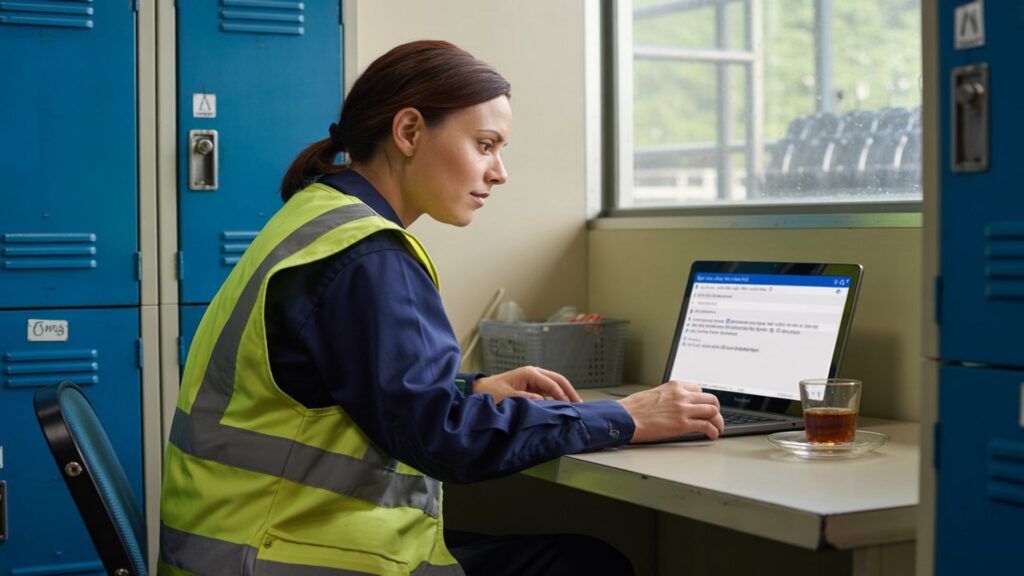
Effective manufacturing English training recognises that Northern Ireland factories can’t stop production for lessons. Your teams operate shifts. Production lines run continuously. Equipment requires constant monitoring. Training must accommodate manufacturing realities.
Shift-compatible scheduling. Sessions can be scheduled inside or outside of your working day. If sessions are taking place during work hours, we can plan around shift patterns, planned maintenance windows, or production lulls. Well-timed live sessions minimise disruption. Some manufacturers schedule longer, more intensive sessions during planned shutdowns or annual holidays.
Multilevel groups. Your factory floor includes workers with varying levels of English proficiency. Initial assessments place people in appropriate groups. Beginners focus on essential safety vocabulary. Intermediate learners develop production communication skills. Advanced learners refine technical documentation abilities.
Self-study access. Between live sessions, your team has 24/7 access to Everywhere English’s online learning platform. Workers practise the vocabulary and scenarios most relevant to their roles at times that suit their schedules.
HR dashboard. Managers and HR teams gain real-time visibility into attendance, grades, and learner progress via a dedicated reporting dashboard. You’ll always know exactly how your team is developing. This is particularly useful when reporting on training outcomes for government-funded programmes.
Measuring the Impact on Safety
Northern Ireland manufacturers invest in English training because it delivers measurable safety improvements, not vague promises. Effective training drives measurable improvements across critical safety and operational metrics.
Safety incident reduction: OSHA estimates that language barriers contribute to 25% of on-the-job accidents. That’s a significant proportion of incidents that are, in principle, preventable. When your multilingual team genuinely understands safety protocols and hazard warnings, rather than nodding along and hoping for the best, your incident numbers will reflect it
Quality metric improvements. Communication-related quality issues drop measurably as English skills improve. Fewer misunderstood specifications mean fewer defects, less rework, and lower scrap rates.
Employee retention. Employees who can understand safety instructions clearly and ask questions confidently feel safer and more valued. They stay longer. Given how difficult it is to recruit skilled manufacturing workers right now, retaining the people you already have is one of the most effective ways to protect operational continuity.
For a broader look at how workplace English training delivers a return for Irish and UK employers, our business English page outlines the commercial case in more detail.
Common Questions from Northern Ireland Manufacturers
What if workers have very basic English? That’s perfectly normal in Northern Ireland manufacturing! Training starts at each worker’s current level. Beginners focus on essential safety vocabulary before progressing to production communication. Visual learning and practical demonstrations support all proficiency levels.
Do supervisors need different training? Absolutely! Supervisors need skills for giving clear instructions, conducting safety briefings, handling difficult conversations, documenting incidents, and coordinating with management. Their programme differs significantly from operator-level training.
How quickly do safety improvements show? Most Northern Ireland manufacturers notice improvements within 4 to 6 weeks. Safety communication improves first, followed by production coordination, then documentation quality. Measurable incident reductions typically appear within 3 to 4 months.
How does the Department for Economy funding work? Various programmes subsidise training costs for eligible Northern Ireland manufacturers. Application processes are straightforward, and we help clients identify the most appropriate funding stream for their situation. Many companies report cost reductions of 50-70% through government-supported initiatives.
Ready to Reduce Safety Incidents Across Your Northern Ireland Facility?
Northern Ireland’s manufacturing sector competes globally on quality, innovation, and safety. Clear English communication isn’t optional when workers’ lives depend on understanding instructions. It’s fundamental to safe operations, quality production, and regulatory compliance.
Every day without targeted manufacturing English training is another day risking preventable safety incidents, quality issues, and production inefficiencies. Your multilingual workforce has tremendous technical skills. Communication barriers artificially limit how safely and effectively they can perform their roles.
Start by identifying where English proficiency gaps are costing your Northern Ireland facility right now. Which safety incidents involved communication failures? Where do quality issues stem from misunderstood specifications? When do production delays stem from unclear instructions?
Once you identify the specific communication gaps affecting your operations, addressing them becomes straightforward. Contact Everywhere English today for a free consultation. Your Northern Ireland manufacturing workforce deserves the communication skills that keep them safe, productive, and confident in their roles.