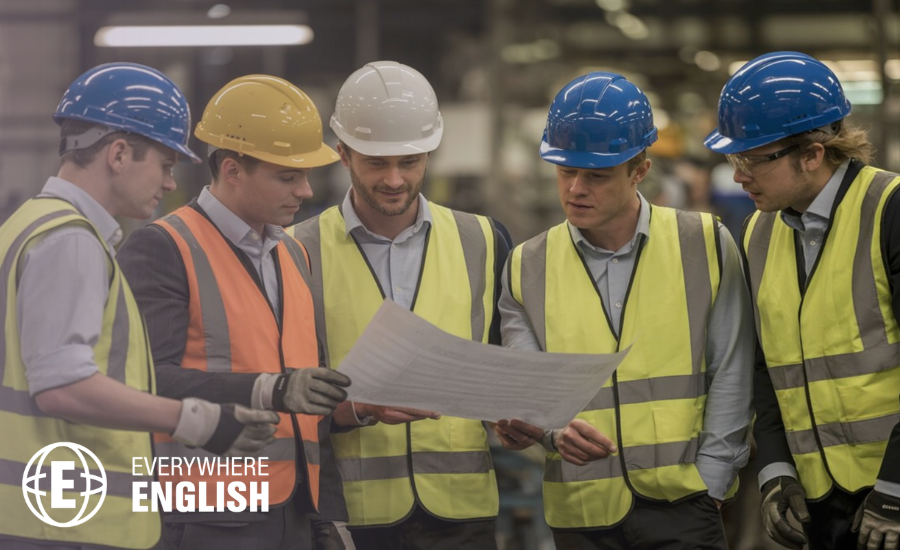

English training for Cork manufacturing teams targets safety communication, SOP comprehension, shift handover language, and quality documentation. Everywhere English delivers industry-specific online courses through weekly live sessions with experienced tutors and a 24/7 self-study platform. Skillnet Ireland funding typically covers 20-30% of eligible training costs for Cork companies.
Manufacturing floor accidents don’t announce themselves in advance. A misunderstood instruction, an unclear warning, a safety protocol that didn’t land properly. These gaps cost Cork manufacturers real money through injuries, production stops, and compliance failures. English training for manufacturing Cork closes those communication gaps before they become incidents!
Cork’s manufacturing sector employs thousands across Little Island, Carrigtwohill, Ringaskiddy, and industrial estates throughout the county. From precision engineering and pharmaceutical production to medical devices and food processing, clear English communication isn’t optional. It’s how safe operations actually happen.
Why Cork Manufacturing Needs English Training Now
Cork factories operate with precision and safety. Pharmaceutical manufacturers must maintain strict GMP compliance. Medical device operations require exact specifications. Precision engineering firms can’t afford measurement errors. Food production facilities must adhere to strict hygiene protocols. All of this depends on crystal-clear communication across multilingual teams.
Your production supervisors need to explain procedures to operators speaking Polish, Romanian, Spanish, Portuguese, and a dozen other first languages. Shift handovers can’t lose critical information. Quality technicians need to record issues accurately. Maintenance teams must describe equipment problems clearly.
When communication breaks down, consequences stack up fast. Safety incidents occur when workers don’t fully grasp hazard warnings. Quality defects multiply when specifications aren’t understood. Production slows when instructions need constant clarification. Employee frustration builds when people can’t share concerns or ideas with their team.
Research consistently shows that language barriers directly increase workplace accidents. Workers with limited English proficiency in manufacturing environments experience higher injury rates than their English-fluent colleagues. Studies document that clear safety communication can reduce accident rates by up to 30%. The logic is straightforward: better English comprehension means fewer injuries, less downtime, lower insurance costs, and reduced regulatory scrutiny.
What Makes Factory English Training Different from Generic Courses
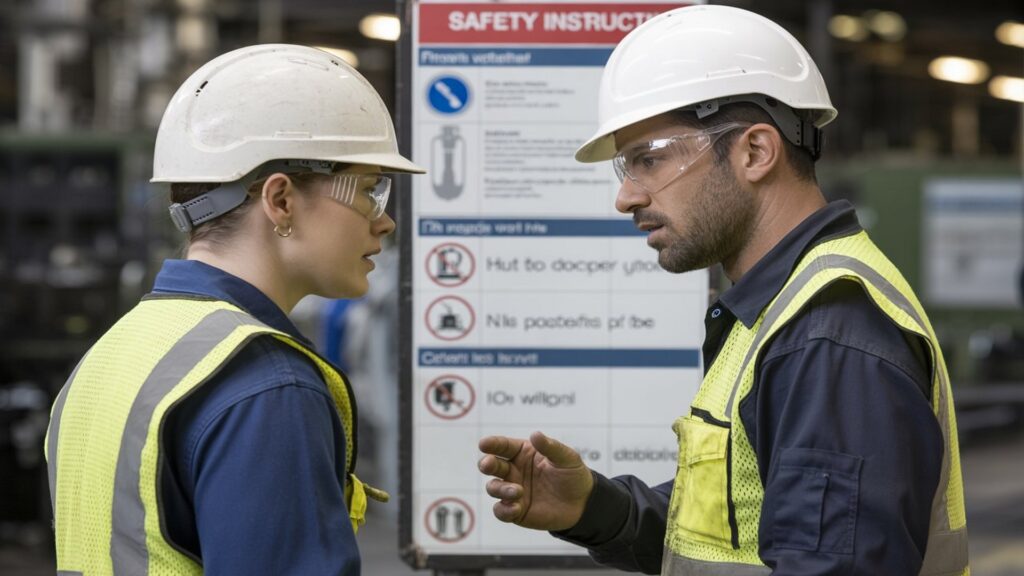
Generic business English doesn’t prepare factory workers for their actual communication needs. Your production team isn’t presenting quarterly reports. They’re coordinating machine changeovers, reporting quality deviations, following lockout-tagout procedures, and responding during emergency situations.
Specialist English for manufacturing targets the specific vocabulary and real scenarios your teams face every day. That means practical, production-floor language skills, not abstract grammar exercises that have no bearing on Monday morning’s shift brief.
Safety Communication
Understanding and explaining hazard warnings, emergency procedures, lockout protocols, incident reports, near-miss documentation, and PPE requirements. When seconds matter in an emergency, every worker must understand instructions immediately.
Production Floor Vocabulary
Machine names and operations, quality specifications, measurement terminology, shift handover language, production targets, downtime reporting, and changeover procedures. These aren’t just words to memorise. They’re the daily language of manufacturing operations.
Quality and Documentation
Writing clear incident reports, completing inspection forms, describing defects accurately, understanding corrective actions, and documenting batch information. Poor documentation creates compliance headaches that auditors flag immediately.
Team Coordination
Shift briefings, task assignments, requesting help, asking clarification questions, and coordinating with maintenance. Production depends on smooth communication across shifts and departments.
Real Cork Manufacturing Communication Scenarios
It helps to think about the specific situations in Cork factories where language gaps cause the most damage.
Morning shift briefings where a supervisor explains production targets, quality priorities, and safety focus areas to a team with six different first languages. This happens every single day, and a miscommunication immediately affects the entire shift.
Equipment breakdown situations require maintenance coordination under time pressure. The operator needs to describe the problem clearly. Maintenance needs to explain the fix and how long it will take. Production planning then adjusts schedules. All of this requires precise, technical English when the pressure is on.
Quality deviation responses mean a technician must document exactly what went wrong, why it matters, and what corrective action was taken. Weak English here creates compliance documentation gaps that auditors spot instantly.
Emergency situations demand immediate, unambiguous communication. Fire alarms, chemical spills, equipment malfunctions, mediand cal incidents. There’s no room for misunderstanding. Everyone must understand instructions at once, or consequences escalate dangerously.
How Everywhere English Delivers Manufacturing Training
Effective manufacturing English training recognises that factory workers learn differently from office staff. Two hours in a classroom discussing hypothetical scenarios doesn’t stick. Your teams need practical training that mirrors their actual work environment.
At Everywhere English, our blended learning model combines weekly live sessions with experienced tutors and 24/7 access to a self-study platform. That means your team can practise safety vocabulary during a break, revisit a documentation module after a shift, or join a group session without leaving the site.
Training is scheduled inside our outside of work hours. If within work hours, you can schedule training around your shift patterns, planned maintenance windows, and production lulls. Some manufacturers run short sessions during shift changeovers. Others use longer sessions during planned downtime. The programme works around you, not the other way around.
Initial assessments place workers into appropriate groups. Beginners focus on essential safety vocabulary. Intermediate learners develop production communication skills. More advanced learners refine technical documentation abilities. Everyone progresses from where they actually are, not where a textbook assumes they are.
You also get full visibility through our HR dashboard, which tracks attendance, grades, and learner progress in real time. Monthly reports give you clear data on how your team is developing and where to focus next. No guesswork.
Skillnet Funding for Cork Manufacturing Companies
Cork manufacturers can access substantial government funding for English training through Skillnet Ireland networks, which dramatically reduces training costs.
Cork Chamber Skillnet and Duhallow Skillnet both serve manufacturing companies throughout the county. Funding typically covers 20-30% of eligible companies’ training costs. Some programmes carry even higher subsidy percentages depending on your situation and company size. Network managers help identify the right funding streams, and the application process is straightforward.
Irish Medtech Skillnet specifically supports medical device manufacturers, a significant part of Cork’s manufacturing base. Engineering Skillnet serves precision engineering and manufacturing firms across Cork, delivering targeted programmes for technical environments.
If you’re unsure where to start, the English for Government and Funded Programmes page explains the funding landscape in plain terms and covers options for businesses of all sizes.
Measuring the Impact on Your Factory
You can’t justify training investment without measurable results, and the good news is that English training delivers concrete, trackable improvements across several key metrics.
Safety incident rates are the most visible early win. Track reportable incidents, near misses, and safety observations before and after training. Most Cork manufacturers see measurable decreases within three to six months.
Quality metrics follow closely. Monitor quality deviation rates, rework percentages, and documentation accuracy. Communication-related quality issues typically drop noticeably as English skills build.
Retention is another area companies often underestimate. Workers who can communicate confidently feel more integrated, valued, and satisfied in their roles. They stay longer. In a market where skill shortages are a genuine problem, that matters enormously.
Our client, Laura Ruiz, HR Manager at a logistics company, put it simply: ‘As a logistics company, we needed precision in communication. This programme helped our drivers and dispatchers become more efficient and safer.’
Frequently Asked Questions
Can training happen during production shifts?
Yes! Short sessions during shift changeovers, planned maintenance, or production lulls keep disruption to a minimum. Some manufacturers schedule longer sessions during annual shutdowns. The programme fits your operations.
What if some workers have very basic English?
That’s completely normal in Cork manufacturing. Training starts at each worker’s current level. Beginners focus on essential safety vocabulary before progressing to production communication and documentation skills.
Do supervisors need a different programme?
They do. Supervisors need skills for giving clear instructions, running shift briefings, handling difficult conversations, and documenting incidents. Their training differs meaningfully from operator-level programmes.
How long until we see results?
Most Cork manufacturers notice improvements within four to six weeks. Safety communication improves first, followed by production coordination, then documentation quality.
Will Skillnet funding cover our costs?
Skillnet Ireland typically subsidises 20-30% of eligible training costs, with some programmes offering higher percentages. Our team helps you identify the right options for your company and guides you through the process.
Ready to Close the Communication Gaps?
Cork’s manufacturing sector competes globally. Clear communication across multilingual teams is fundamental to safe operations, quality production, and regulatory compliance. Every week without targeted English training is another week risking preventable safety incidents, quality failures, and production inefficiencies.
Your multilingual workforce has real potential. Language barriers artificially limit what they can contribute and what they can achieve. Closing those gaps is one of the most practical investments a Cork manufacturer can make right now!
Start by honestly identifying where language barriers cost your factory today. Which safety incidents involved communication failures? Where do quality deviations trace back to misunderstood specifications? Once you know the gaps, addressing them is straightforward.
Take a look at our English for Manufacturing service page for full details on what’s included, or contact us to book a free consultation and discuss your facility’s specific requirements. Whether you’re in Little Island, Carrigtwohill, Ringaskiddy, or anywhere across the county, there’s a programme built for your production environment.
Your Cork manufacturing workforce deserves communication skills that keep them safe, confident, and productive. Let’s build them together.